

MODULINE ENGINEERING CONSULTANCY L.L.C S.O.C

Verified By : Dr. Mahmoud Katrangi
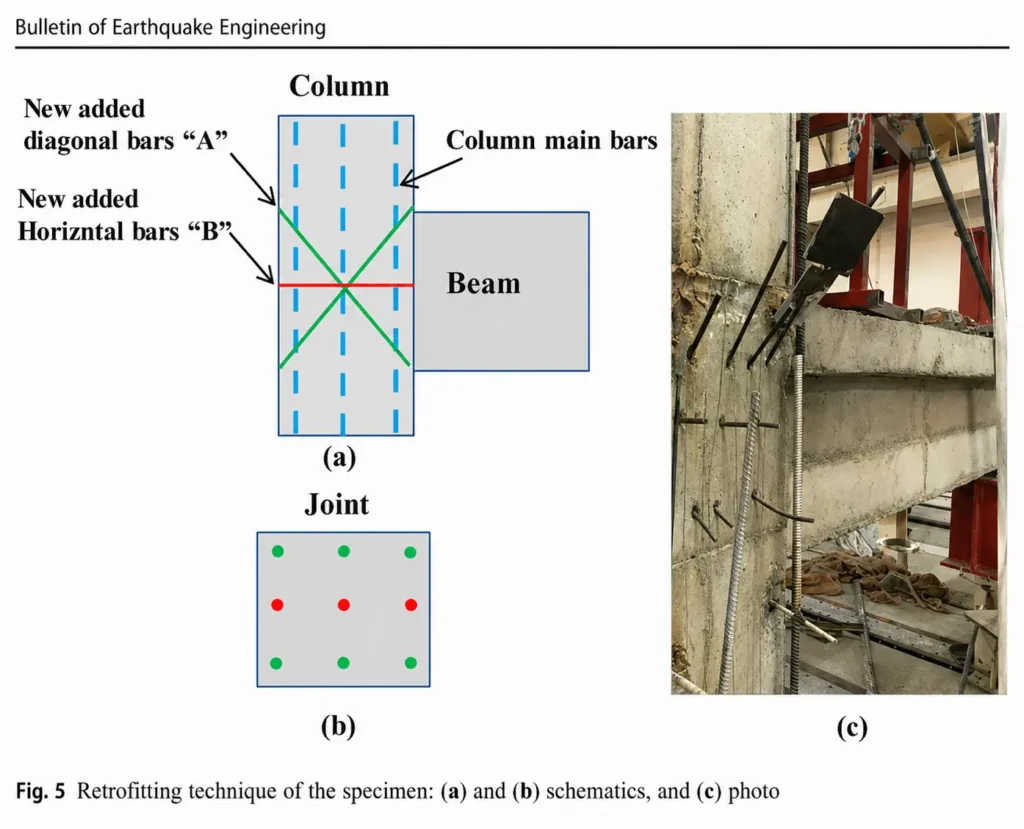
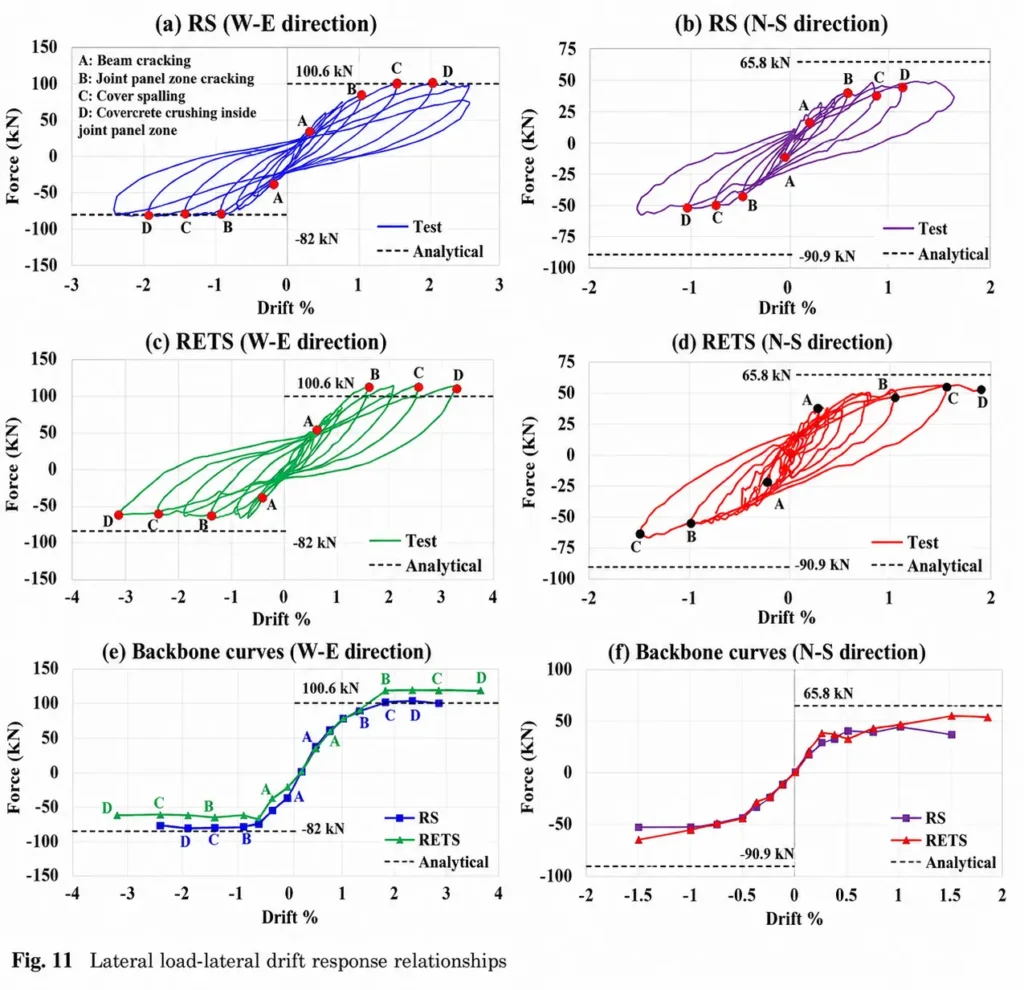
This study presents experimental results from bidirectional cyclic loading tests evaluating the seismic behavior of existing large-scale corner beam–column joints reinforced with plain bars. It simultaneously examines the influence of bar configuration, hook geometry, and slab participation. Two 3D specimens with a scale factor of 0.73 using similar geometries and reinforcement details are tested. The first specimen is used to assess the seismic performance of the as-built beam-column joint, whereas the second one is retrofitted using a proposed technique to enhance the shear behaviour of the beam-column joint assembly. For this goal, some horizontal and diagonal rebars were planted within the joint to control the width and propagation of the cracks of the beam-column joint. The results indicate that the as-built beam–column joint response is primarily governed by joint shear failure combined with beam bar slip. In contrast, the retrofitted specimen is characterized by beam flexural action, column rocking, and bar slip, with only minor internal joint damage. The retrofit achieved a 63% increase in drift capacity, a 30–40% improvement in beam rotation capacity, and substantially higher shear strain capacities by 82% and 416% relative to the as-built specimen. Nevertheless, the failure mechanisms, joint shear strength, and shear strain of both specimens NZSEE Revised C5 (2018). Moreover, although ACI 369 − 22 provides a conservative lower-bound estimate of shear capacity, it may underestimate the actual capacity of exterior corner joints, where slab participation, reinforcement asymmetry, and transverse beam contributions significantly influence the structural response
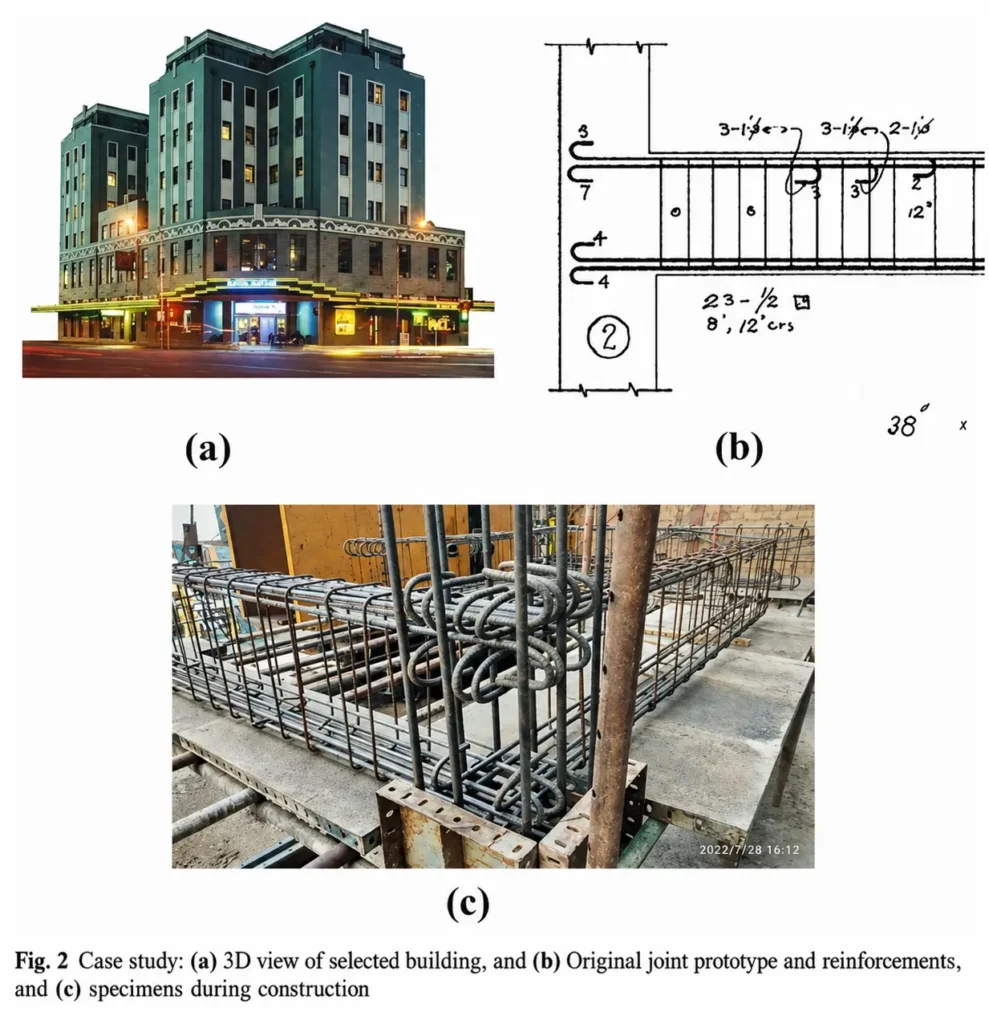
Figures 3 and 4 show the similar geometries and details of specimens. Both specimens are reinforced with 180° hook-ended plain bars. The columns have a section of 400 × 400 mm², the beam’s cross-section is 400 × 250 mm², and the slab’s effective cross-section is 150 × 575 mm². The column length is Lc = 2725 mm, representing a typical inter story.
To view the full technical study and experimental data, you can visit the official link for searching via Digital Object Identifier (DOI)
Have a project in mind or need expert professional team advice you ?
MODULINE ENGINEERING CONSULTANCY L.L.C S.O.C | Combining technical innovation with the highest standards of precision to deliver integrated construction solutions.
Receive our experts' insights on securing structures and navigating engineering challenges
Copyright © 2026 All Rights Reserved | Moduline.ae